
Selwonk

Where Early Talent Leaders Grow

Into The New Standard of the Role

The Method

Selwonk developed ExecOS after repeatedly observing the same pattern among early-talent leadership: highly capable leaders still operating within a version of the role built almost entirely around execution.

But the market now demands much more.

As AI reshapes entry-level work, scrutiny around talent investment increases, and organizations demand clearer workforce impact from early-career hiring, leaders are being pushed into a far more strategic role — one many were never originally developed for.

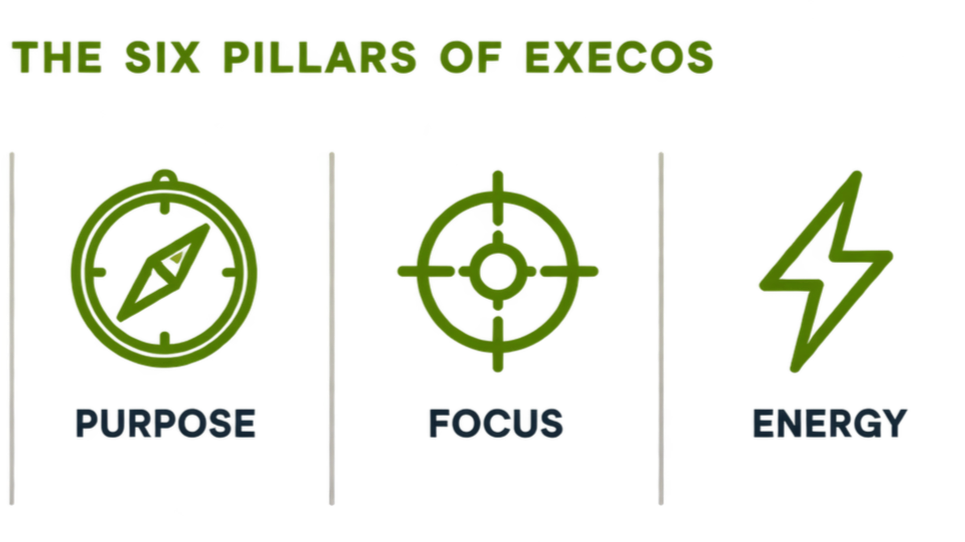
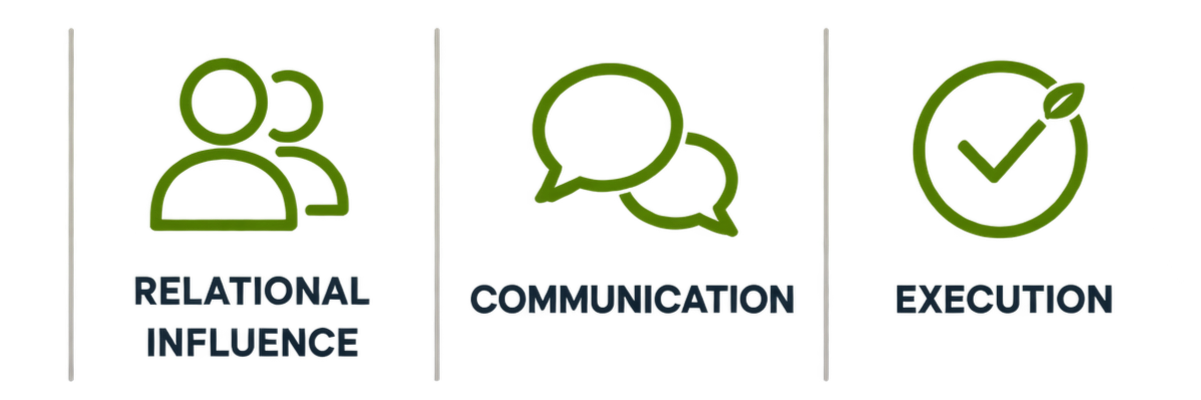
ExecOS was built to help early talent leaders grow into that new standard. It strengthens six internal drivers behind higher-impact leadership as the role evolves: Purpose • Focus • Energy • Relational Influence • Communication • Execution

Through leadership development, diagnostics, coaching, and organizational partnerships, Selwonk helps early talent leaders evolve from operational executors to leaders who make early talent a serious competitive advantage for the business.

  • A Powerhouse is an early talent leader whose value is no longer defined by execution alone. They help the business see where early talent can become a competitive advantage — then influence, build, protect, and unblock what needs to happen to make it real.

    This free 30-minute diagnostic explores where your leadership range is strongest, what may be limiting your influence inside the business, and where the next standard of the role now requires you to grow.

    👉 Book Now

  • A 30-day leadership reset and strategic blueprint for early talent leaders ready to operate at the next level.

    Built for leaders who already know the bar for the role has gone up, the Sprint diagnoses the operating patterns limiting influence, expands leadership range, and creates a personalized roadmap for stronger traction, workforce influence, and business impact.

    Through the ExecOS method, targeted leadership challenges, and real-time application inside the role, leaders recalibrate how they think, communicate, prioritize, and operate under pressure — fast.

    👉 View Sprint Details

  • A 10-week leadership development experience for early talent leaders growing into the new standard of the role.

    As AI, tighter budgets, and rising expectations around workforce impact reshape early talent, participants strengthen the capabilities increasingly separating high-impact leaders: strategic judgment, stakeholder influence, executive communication, systems thinking, business credibility, and workforce strategy thinking.

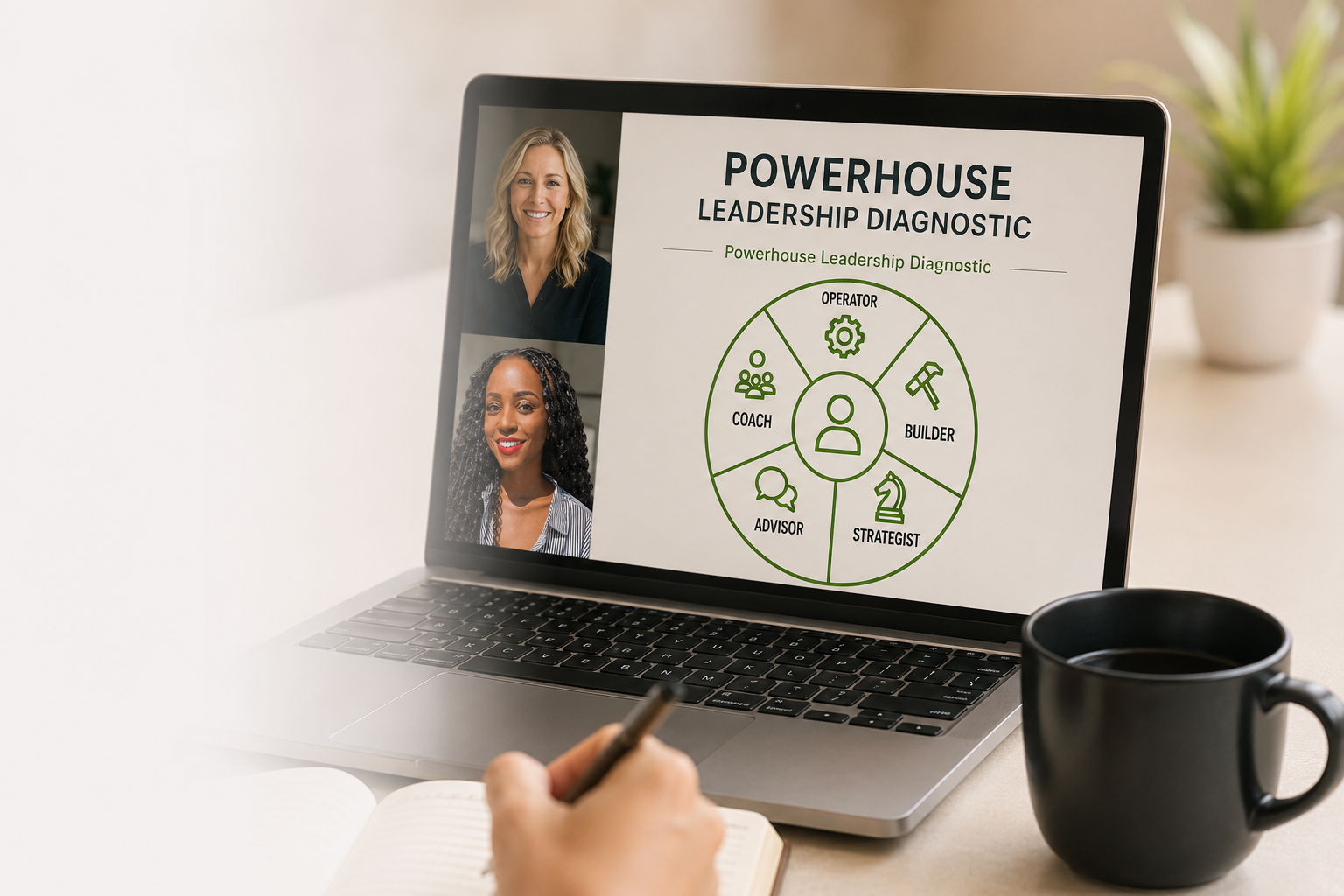
    Through the Powerhouse model, ExecOS, live coaching, and applied development inside their real role, leaders learn to pair strong execution with stronger strategic leadership — operating as advisors, strategists, builders, and coaches inside the business.

    Enrollment for the June cohort closes June 28.

    👉 View Program Details

  • Strategic leadership development for early talent leaders navigating greater visibility, complexity, and pressure as the role evolves.

    Private coaching offers a more individualized space to work through that evolution in real time. Sessions are booked on demand within a defined coaching package and grounded directly in the realities already happening inside the role — helping leaders strengthen judgment, expand leadership range, navigate higher-stakes situations, and operate more intentionally as expectations increase.

    Ideal for leaders seeking deeper strategic partnership, more tailored development, and direct support navigating the next evolution of their leadership.

  • We partner with Early Talent, Talent Acquisition, and HR teams to help leaders grow into the new standard the market now demands.

    Engagements may include targeted workshops, leadership development sprints, ExecOS diagnostics, and advisory support focused on workforce strategy influence, stakeholder leadership, executive communication, stronger quality-of-hire judgment, and more strategic capability across the function.

    The result: leaders who operate more strategically inside the business, teams with stronger workforce influence, and earlier readiness for where the role is heading next.

Most early talent leaders we worked with were caught between the operational instincts that originally made them successful and the kind of strategic leadership the market now demands. Becoming a high performer today meant learning how to operate at a completely different level inside the business.

What The New High-Performer Standard Looks Like

Here’s what that evolution looked like in practice:

Execution intensity→ proactive workforce strategy influence

Staying highly involved in execution→ breaking out of the weeds to focus on highest-value work

Reacting quickly to urgency→ protecting strategic focus and prioritization

Reporting updates→ data storytelling and strategic narrative building

Solving problems personally→ delegating, automating, and building stronger systems

Operator-mode leadership → intentionally shifting between advisor, strategist, builder, and coach modes

  • “I didn’t expect the nervous system work to be the part that changed everything, but it did. I was used to thinking leadership development was about what to say or who to talk to. This made me realize it’s much more about how I show up. In high-stakes meetings, if I wasn’t grounded, I’d data-dump and come across like a reporter instead of an advisor. The difference when I regulate myself is night and day.”

    Campus Recruiting Manager, Global Hedge Fund

  • “We had a new CHRO start, and I met with her during her first week. I used a lot of the tools from this work to frame my team and the value of what we do, and I felt like I really rocked that meeting. She gave my boss positive feedback about me afterward, and I’ve since received strong feedback from other C-suite meetings as well. I can tell I’m showing up differently.”

    Global Early Careers Manager, Financial Services

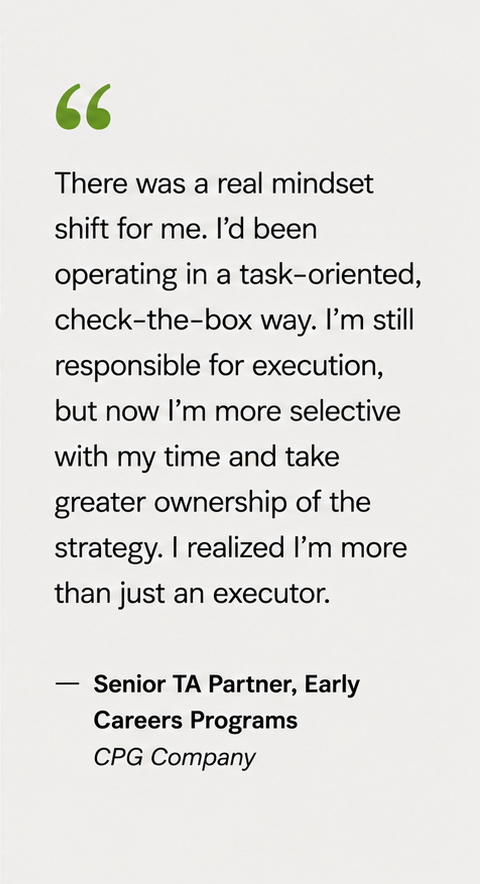
  • “There was a real mindset shift for me. I realized I’d been operating in a task-oriented, check-the-box mindset. I started getting clear on what actually mattered and what was just noise. I’m still responsible for execution, but now I’m more selective and take greater ownership of the strategy behind the program. It helped me see that I’m more than just an executor.”

    —Senior TA Partner, Early Careers Programs, CPG Company

  • “I felt very seen in our conversations. You put into words the realities of early careers work and where I wanted to go in a way that was clearer than I could on my own. The ExecOS method turned that into something tangible. It’s something I’ll reference often as I continue stepping into the leader I want to be.”

    —University Recruiting Manager, Industrial Goods

  • “I realized I defaulted to being the problem solver, even though it was consuming more of my day than I thought. Instead of immediately offering my solution, I started asking my team, ‘What are you considering?’ I saw they often already had the right thinking. That shift moved me from being the fixer to becoming more of a strategic coach — not just providing answers, but building their strategic thinking.”

    —Early Careers Leader, North America, Global Insurance

  • “The early talent space is unique, and there aren’t many resources built specifically for it beyond a few conferences or LinkedIn groups. Having someone who truly understands the landscape — but isn’t inside your organization — is incredibly valuable. There simply aren’t many spaces dedicated to developing early talent leaders the way the Lab does.”

    —University Recruiting Manager, Industrial Goods

  • “It didn’t feel like a generic leadership framework. It was tailored to my role in campus recruiting and my specific goals, and it helped put language to the kind of leader I wanted to become. Then it broke that down into clear, concrete steps I could actually take. The depth and structure made it feel uniquely thoughtful and practical.”

    —Senior Manager of Campus Recruiting, Investment Firm

  • “The ExecOS method was incredibly valuable. I loved how it broke down my strengths, what happens under pressure, and the signals to look for so I can shift in the moment. It was clear, easy to digest, and genuinely transformative to see it laid out that way. If I’m navigating something specific, I know exactly what to draw on.”

    Intern Program Manager, Consumer Goods

  • “I realized I couldn’t grow into a more strategic version of my role without first addressing the operational gaps that were keeping me in the weeds. I hadn’t even fully defined what that next level looked like, and the admin work was constantly getting in the way. Getting clear on what I actually needed to focus on made that next level feel concrete instead of something I assumed would eventually happen.”

    —Early Careers & Outreach Manager, Manufacturing

  • “One of the biggest realizations was that I’d already done the work to get here. I didn’t need to keep proving myself anymore. That was keeping me stuck in executor mode. Shifting my focus toward the business impact of my team’s work changed how I lead, how I delegate, and how I show up in meetings. I go in calmer, I leave calmer, and I can feel the perception shifting from ‘the recruiter they’ve known for years’ to the manager I am now.”

    —Global Early Careers Manager, Financial Services

  • “My company offers internal trainings and leadership programs, but there was nothing like the Lab. We have a leadership boot camp, but I’d never been invited — and I’d been here 11 years and leading for three. It made me realize that if I wanted this kind of development, I couldn’t just wait to be tapped.”

    —Early Careers Leader, North America, Global Insurance

  • “The ExecOS framework just clicked for me. I immediately started using it to prepare for a meeting with our VP of HR about our intern conversion strategy. I even shared it with my boss and the rest of our TA leadership team, and it sparked a really strong reaction. It gave us a clear way to think about how we’re showing up as leaders, and the timing couldn’t have been better heading into the new year.”

    —Early Careers Manager, Global Manufacturing Company

  • “I think I took four pages of notes during our session. It couldn’t have been more timely. This is a really transformational season in my role, and it gave me practical ways to be intentional going into it. I have a lot of confidence I’ll use what I learned in many different ways.”

    —Intern Program Team Leader, Manufacturing

  • “What really hit me was realizing this wasn’t a skill gap — it was an outdated individual contributor reflex. Under pressure, I’d think, ‘Maybe I’m not cut out for this.’ Naming that was transformative. It helped me catch myself slipping back into old reflexes and actually change how I respond.”

    —Early Talent Team Lead, Consumer Goods

  • “When you propose attending a conference, you’re always asked what you’ll bring back and implement. The Lab feels just as valuable, if not more, because you leave with clear direction, a practical plan you can apply immediately, and a community of other early talent leaders working through the same challenges. Especially if you’re the only one leading early talent in your organization, having that space to connect and build alongside others is incredibly impactful.”

    —Early Careers & Outreach Manager, Manufacturing

  • “It wasn’t about being handed answers. You pushed me to think through and articulate things I hadn’t fully unpacked yet, which made the insights stick. It was also refreshing to work with someone who truly understands the realities of early careers work, not just general leadership advice. Since then, I’ve found myself using the ExecOS method when I’m preparing for meetings I’m nervous about or sitting down to plan the week. It’s become something I rely on to be more intentional.”

    Campus Recruiting Manager, Global Hedge Fund

  • “There’s a massive appetite in the early talent space for leaders to figure out how to do this work effectively. You can feel it anytime we’re in a room together. People are constantly asking, ‘What are you doing? How are you doing it?’ There’s so much value in having structured time to talk through what’s actually showing up in our worlds with someone who understands it. That’s what makes the Lab so valuable.”

    —University Recruiting Leader, Consumer Goods

  • “From one perspective, I almost see the Lab like a SHRM certification in terms of the depth and focus. It feels like a meaningful investment to spend time honing key areas of early talent leadership. In some ways, it’s even more valuable than larger conferences because it’s directly applied to what we’re navigating day to day.”

    —Early Careers Manager, Global Manufacturing Company

  • “What stood out to me was how clear and actionable the method was. It wasn’t just high-level strategy. It broke things down into tangible steps I could actually apply in upcoming meetings and deliverables. I appreciated the micro-dose approach of building new habits slowly and consistently instead of trying to jump straight to the end goal. It felt structured, thoughtful, and tailored to where I am right now, and it gave me a clear plan for stepping into a more secure version of myself as a leader.”

    — Head of Early Careers, US, Professional Services

  • “I don’t think anyone really teaches you that your identity has to shift as expectations rise. Companies assume that if you were strong in the old version of the role, you’ll automatically be strong in the next one, and that’s just not the case. I’m realizing how much I enjoy getting things done, but that can’t be the priority anymore. If you don’t consciously make that shift, you’re going to struggle.”

    —Intern Program Manager, Consumer Goods

The Function Is Evolving

So Is the Kind of Leadership It Demands

Whether you’re exploring your own next level of leadership or thinking about the future capability of your team, there are two ways to start the conversation.